
X-rays add new twist to narwhal's spiral tusk
New study finds that the tusks have not one but two spirals, twisting in opposite directions.
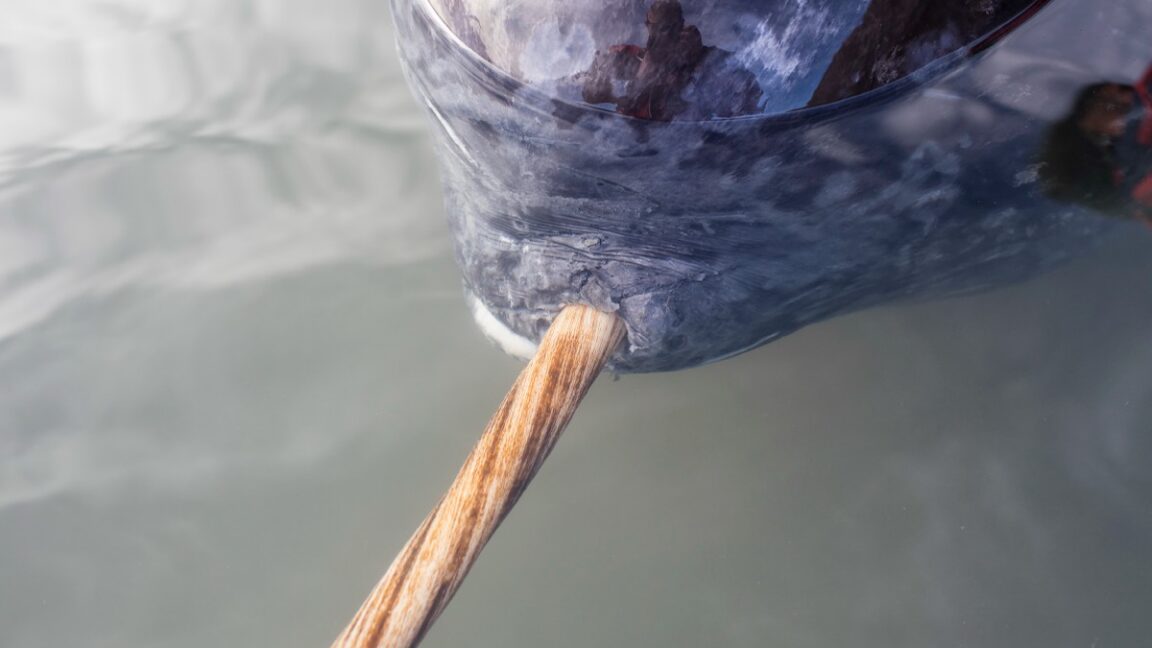
New study finds that the tusks have not one but two spirals, twisting in opposite directions.
The short version
- There’s a general consensus that these tusks most likely evolved via sexual selection as a form of social status.
- They clearly aren’t crucial for survival, since the females usually don’t develop the tusk—and if they do, the tusks are much smaller with fewer spirals—and yet typically live longer than the males.
- But the precise function of the tusk is still a matter of considerable debate.
What happened
Narwhals have been observed using them to stun small Arctic cod while hunting. It’s possible they are used as weapons in fights, but this behavior hasn’t been directly observed, although there have been narwhals found with tusks embedded in their bodies.
Why it matters
The presence of several million nerve endings suggests that narwhals may be able to sense temperature or salinity changes in the water with their tusks.
Summary by Nerd News Network. Read the full article at Ars Technica via the links above and below.