
This strange “spacetime crystal” can suddenly become a black hole
Physicists have mathematically captured a bizarre “spacetime crystal” that can either dissolve or collapse into a microscopic black hole after only a tiny change in energy.
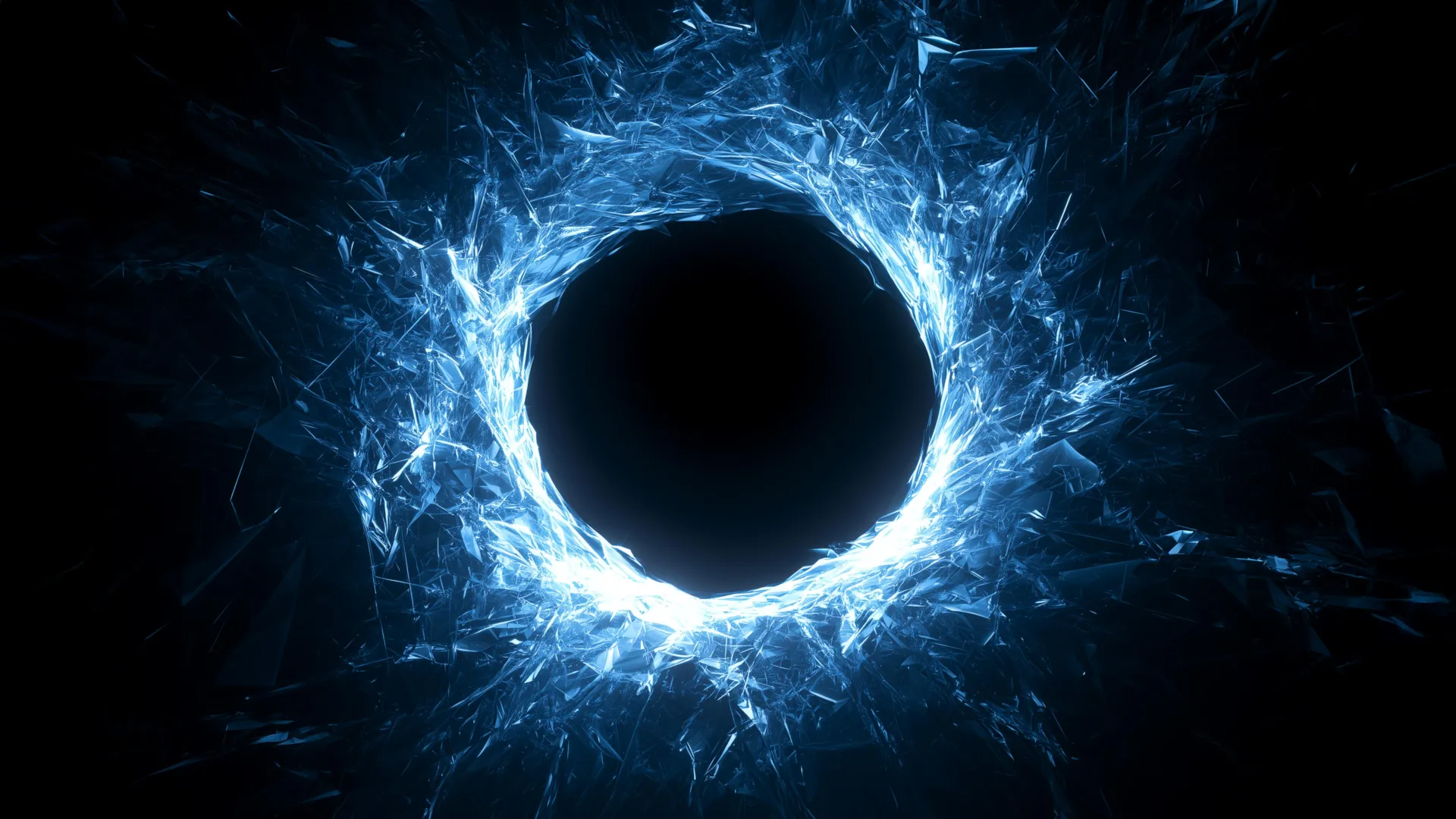
Physicists have mathematically captured a bizarre “spacetime crystal” that can either dissolve or collapse into a microscopic black hole after only a tiny change in energy.
The short version
- Their breakthrough came from an unusual trick involving infinitely many dimensions, potentially giving researchers a new tool for studying primordial and microscopic black holes.
- Physics allows for black holes far smaller than the enormous objects typically found at the centers of galaxies or created when massive stars collapse.
- Under the right conditions, microscopic black holes could also form when spacetime enters an unusual critical state and organizes into a repeating, crystal-like pattern.
What happened
Researchers from Goethe University Frankfurt and TU Wien have now found a way to describe this process mathematically. For the first time, they derived an exact formula for the phenomenon by using an unconventional mathematical approach.
Why it matters
Most familiar black holes are associated with violent cosmic events, including the deaths of massive stars.
Summary by Nerd News Network. Read the full article at ScienceDaily — Top Science via the links above and below.