
Policy experts: Europe stuck between "rock and a hard place" on launch
It turns out that the economics of rocket reuse are pretty, pretty good.
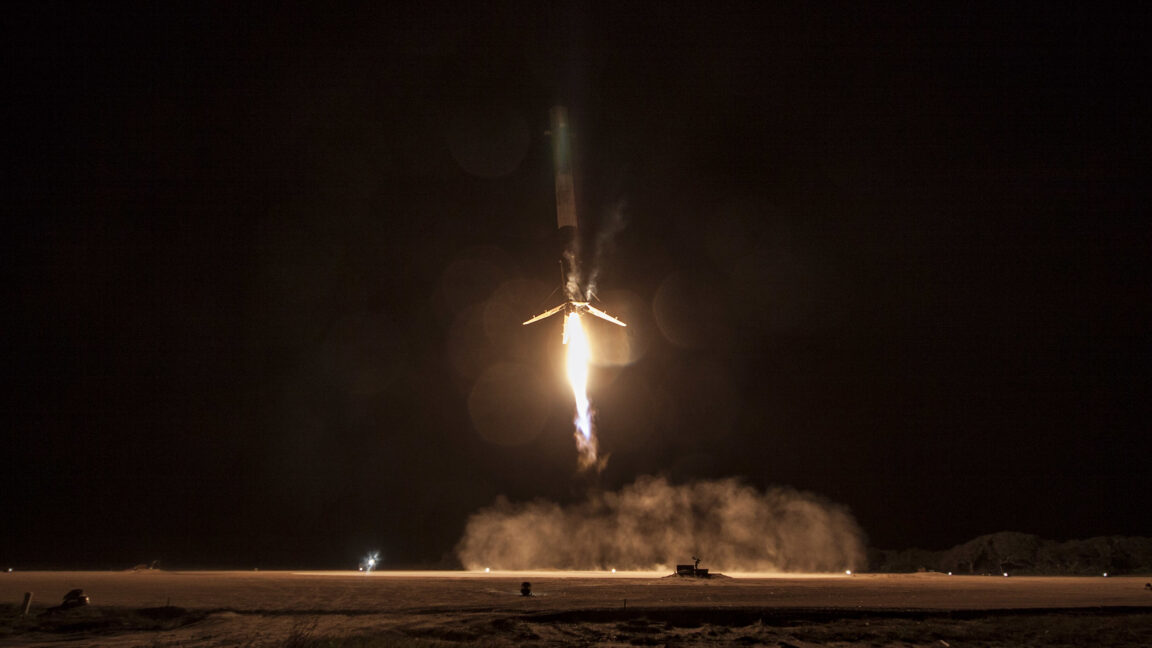
It turns out that the economics of rocket reuse are pretty, pretty good.
The short version
- A decade ago, SpaceX began to land the first stages of the Falcon 9 rocket with some regularity, but it’s only within the last five years that the company has begun flying the rocket dozens and then hundreds of times a year.
- As a result, SpaceX has very rapidly become responsible for more than three-quarters of all mass launched into orbit.
- Much of this is the company’s Starlink satellites, but due to cost and the lack of alternatives, SpaceX has also stepped up to launch payloads from all comers, including direct competitors such as Amazon, Northrop Grumman, AST Space Mobile, OneWeb, and more.
What happened
New research is beginning to quantify just how much the introduction of the Falcon 9 rocket, the adoption of reuse, and the vehicle’s high cadence have upended the global launch market. Public policy researchers based in the United Kingdom and Italy have published new research in Economics Letters that showcases the marked changes wrought by the Falcon 9 by mining a dataset of more than 6,700 launches from 1960 to 2025.
Why it matters
One of the more striking findings comes in the cumulative payload to orbit by nation.
Summary by Nerd News Network. Read the full article at Ars Technica via the links above and below.