
Physicists create a tiny “Big Bang” with surprisingly small atomic nuclei
Researchers at CERN have created microscopic versions of the early Universe by colliding surprisingly small atomic nuclei at nearly the speed of light.
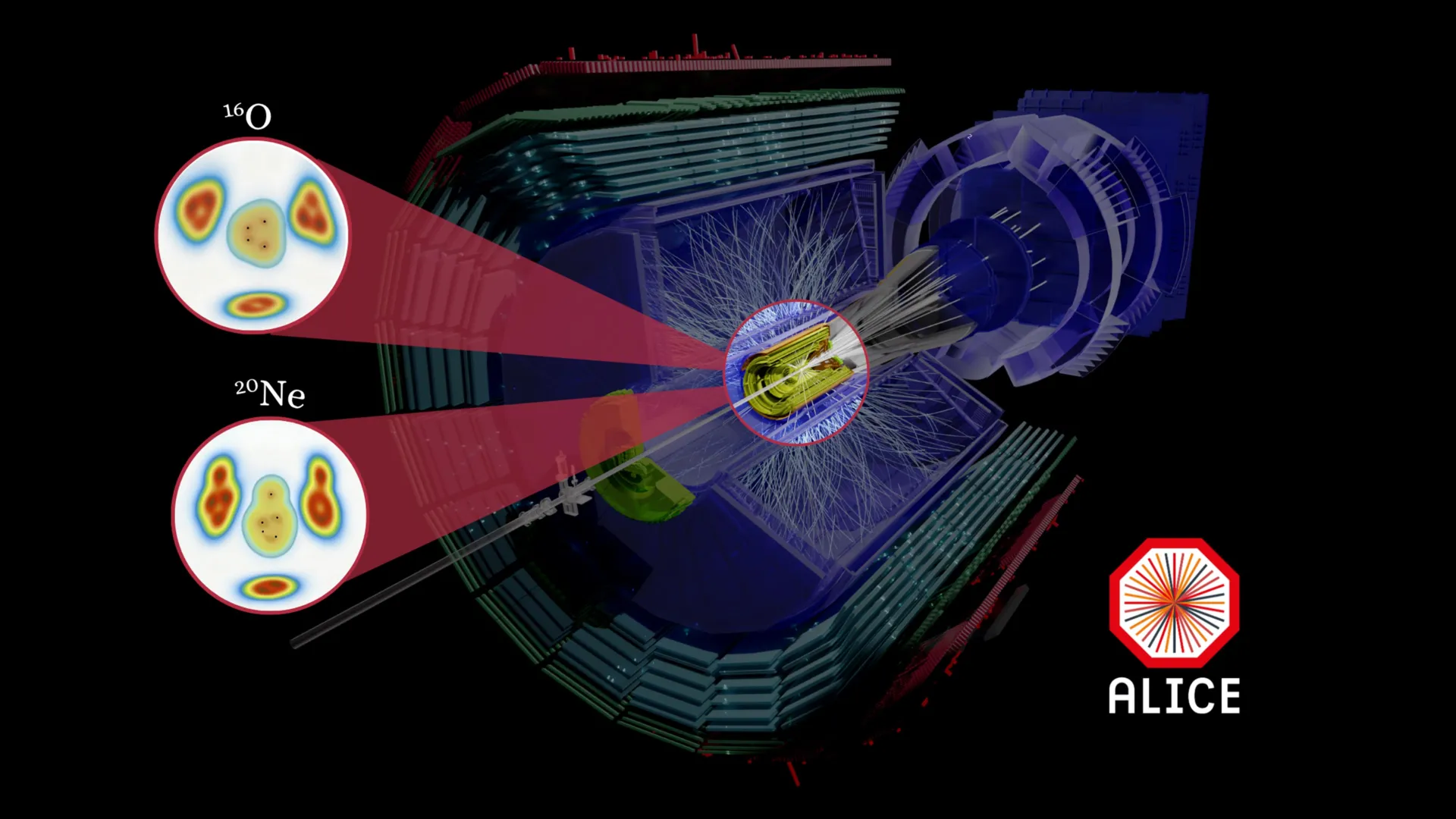
Researchers at CERN have created microscopic versions of the early Universe by colliding surprisingly small atomic nuclei at nearly the speed of light.
The short version
- The collisions produced quark-gluon plasma, the ultra-hot matter believed to have filled the cosmos shortly after the Big Bang.
- Even more intriguingly, the particles left behind reveal the shape of the nuclei that created them, offering a new way to probe both nuclear physics and the Universe’s earliest moments.
- Researchers at the University of Copenhagen have recreated the primordial state of matter believed to have filled the Universe shortly after the Big Bang, using collisions between atomic nuclei far smaller than scientists once thought possible.
What happened
These microscopic versions of the early Universe could help researchers understand both the first moments of cosmic history and some of the deepest questions in nuclear physics. What was the Universe like before stars, planets, atoms, and the other familiar forms of matter existed?
Why it matters
At CERN in Switzerland, physicists are trying to answer that question by reproducing some of the extreme conditions that existed in the Universe shortly after its birth.
Summary by Nerd News Network. Read the full article at ScienceDaily — Top Science via the links above and below.