
NASA’s Webb finds signs of Mars-sized worlds smashing together
NASA’s James Webb Space Telescope is giving astronomers a glimpse of the kinds of violent collisions that may have shaped our own solar system, including the giant impact thought to have created the Moon.
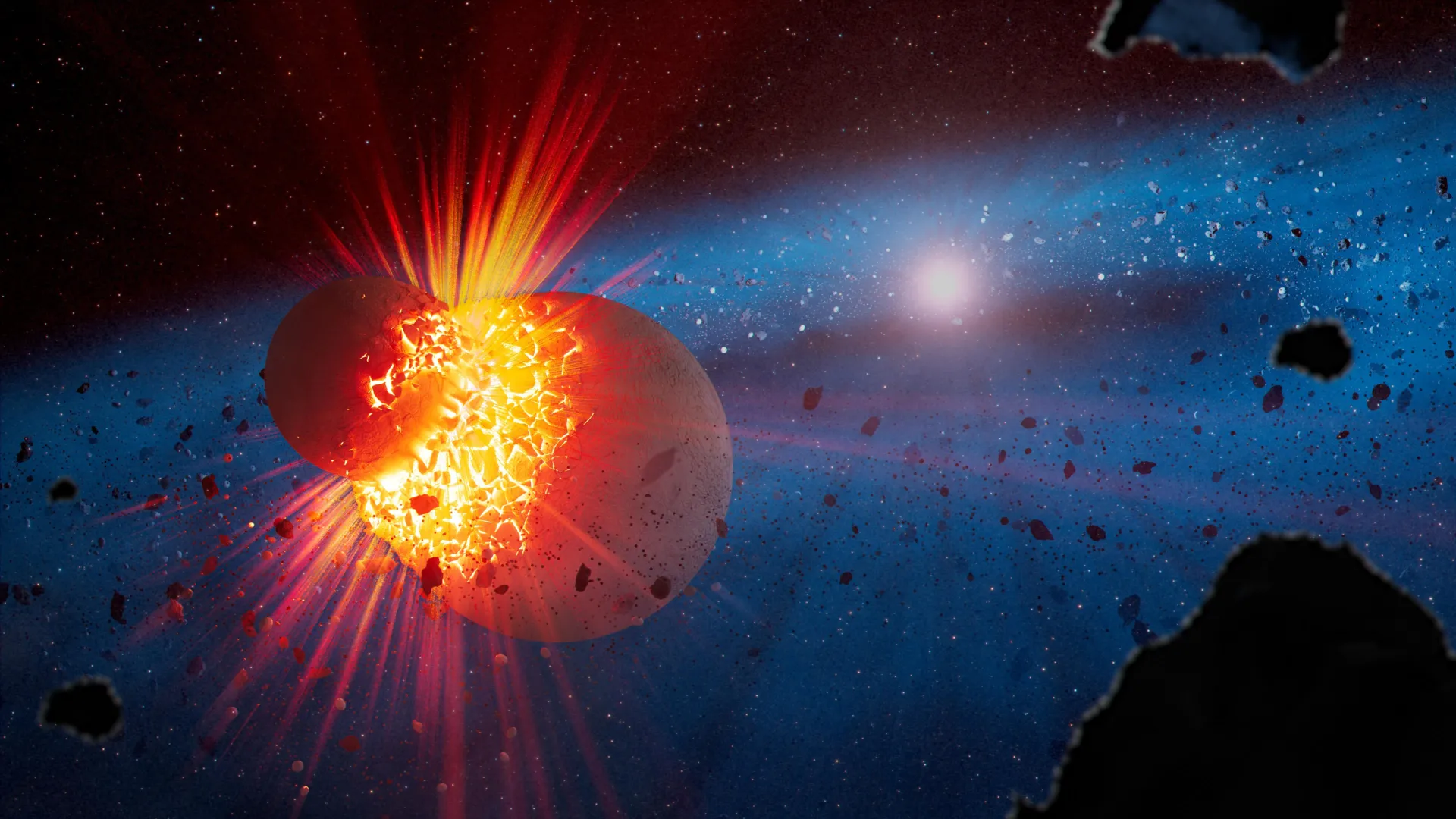
NASA’s James Webb Space Telescope is giving astronomers a glimpse of the kinds of violent collisions that may have shaped our own solar system, including the giant impact thought to have created the Moon.
The short version
- By studying 21 rare “extreme debris disks” around young stars, researchers found that their dust can reveal the scale and intensity of planetary collisions.
- Scientists think one of the most important events in the early solar system was a colossal collision between the young Earth and a Mars-sized body known as Theia.
- The impact likely vaporized huge quantities of rock and hurled material into space.
What happened
Some of that debris eventually came together to form the Moon, where NASA's Artemis program is returning humans, preparing for Mars, and shaping the future of space exploration. That ancient impact dramatically altered Earth.
Why it matters
Now, astronomers are using NASA's James Webb Space Telescope to investigate young star systems that appear to be experiencing similarly violent events.
Summary by Nerd News Network. Read the full article at ScienceDaily — Top Science via the links above and below.