
Chang’e-6 lunar soil contains a surprising magnetic time capsule
Scientists studying Chang’e-6 lunar soil have discovered a previously unknown magnetic mineral in natural Moon samples: a form of metallic iron called γ-Fe.
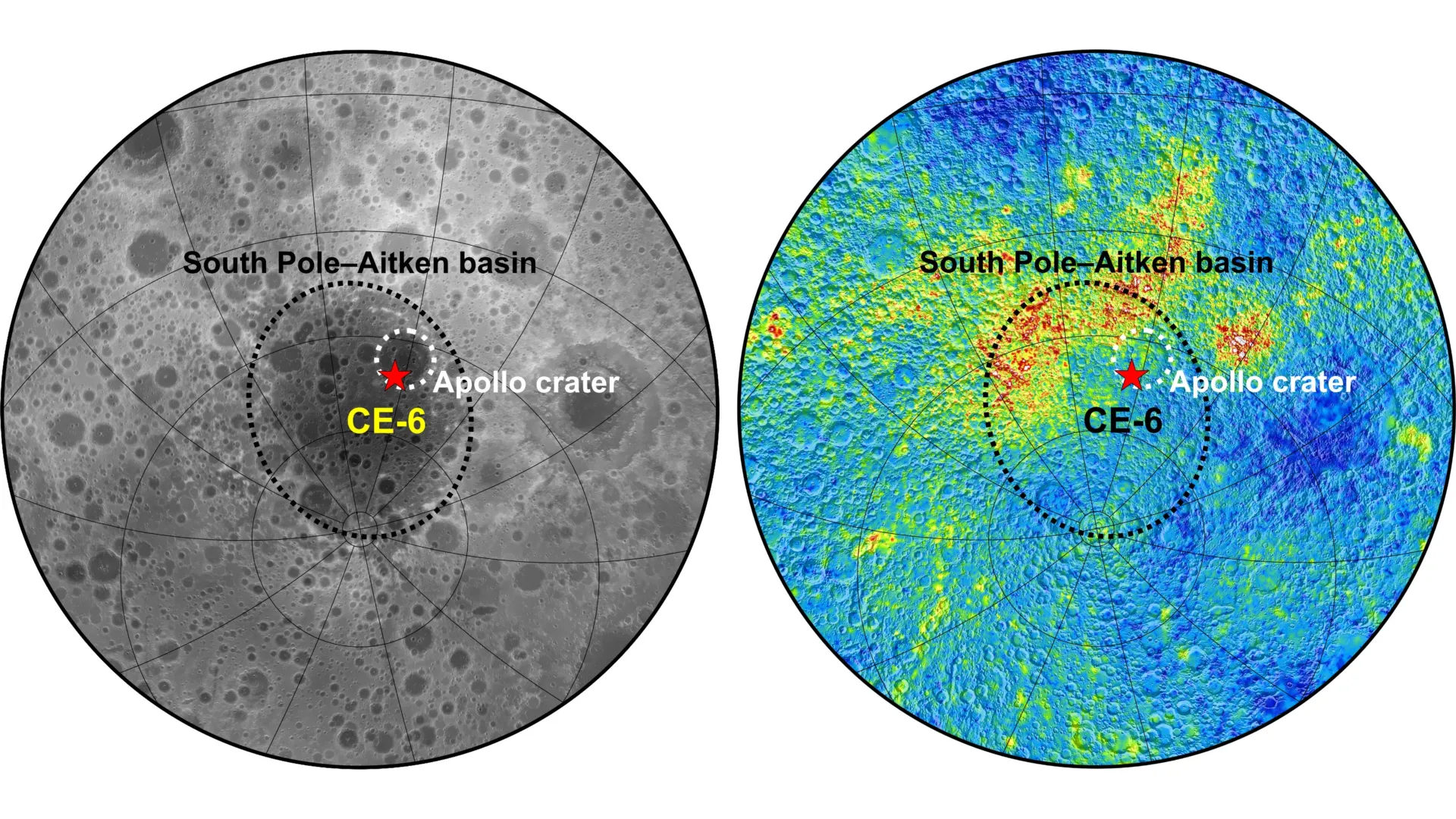
Scientists studying Chang’e-6 lunar soil have discovered a previously unknown magnetic mineral in natural Moon samples: a form of metallic iron called γ-Fe.
The short version
- Found inside tiny impact-glass particles, the nanoscale iron can preserve a stable magnetic signal, potentially acting like a microscopic fossil of the Moon’s long-lost magnetic field.
- The Moon no longer generates a global magnetic field, but traces of its ancient magnetism remain locked inside lunar rocks and soil.
- By studying the magnetic minerals preserved in these materials, scientists can reconstruct how the Moon's magnetic environment changed over time.
What happened
Researchers analyzing metallic iron inside impact glass from Chang'e-6 lunar soil have now identified face-centered cubic γ-Fe for the first time in natural lunar samples. Haifeng Du of the High Magnetic Field Laboratory at the Hefei Institutes of Physical Science (HFIPS) of the Chinese Academy of Sciences (CAS).
Why it matters
The findings were published in the Proceedings of the National Academy of Sciences (PNAS) on September 16.
Summary by Nerd News Network. Read the full article at ScienceDaily — Top Science via the links above and below.